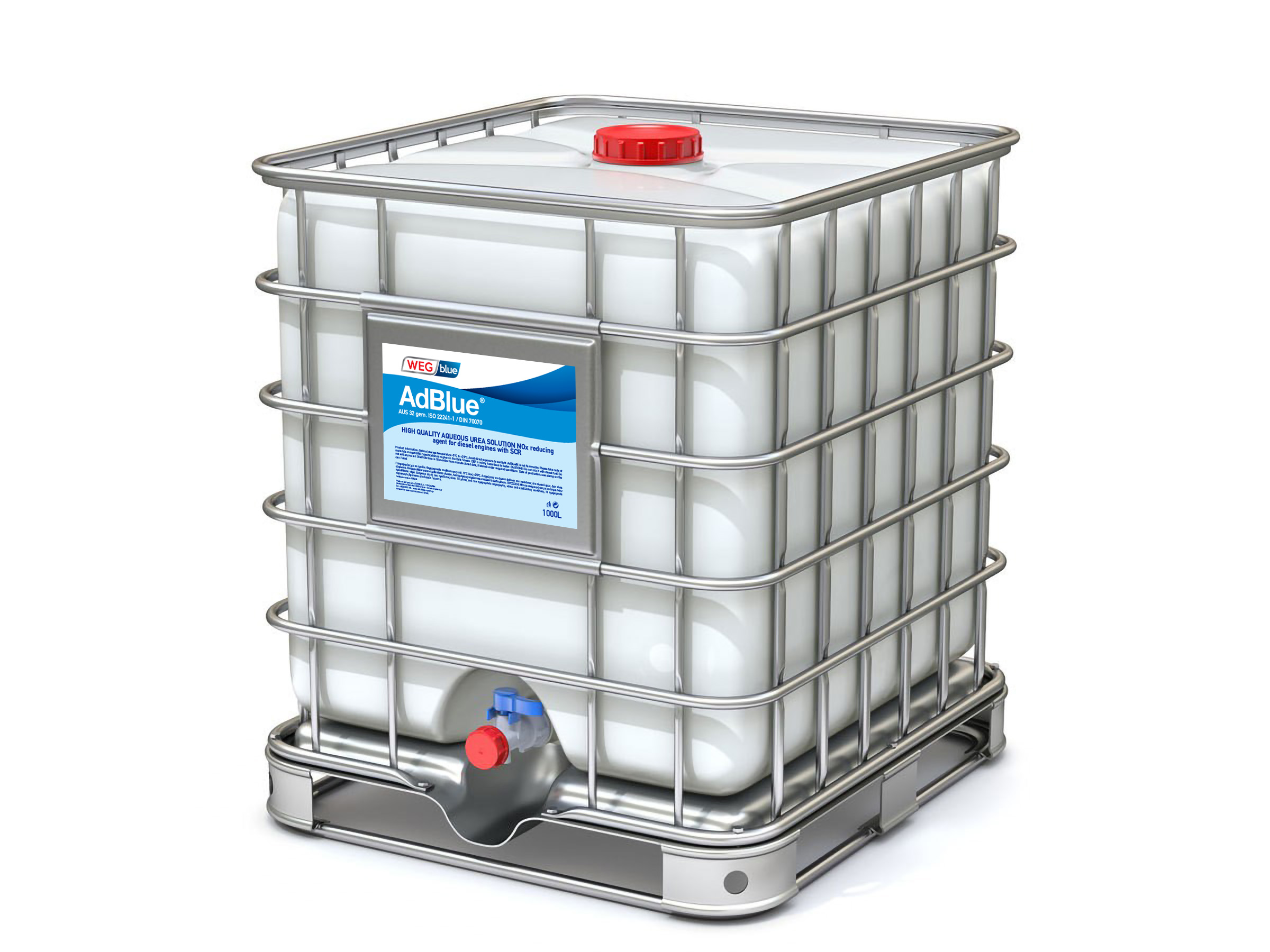
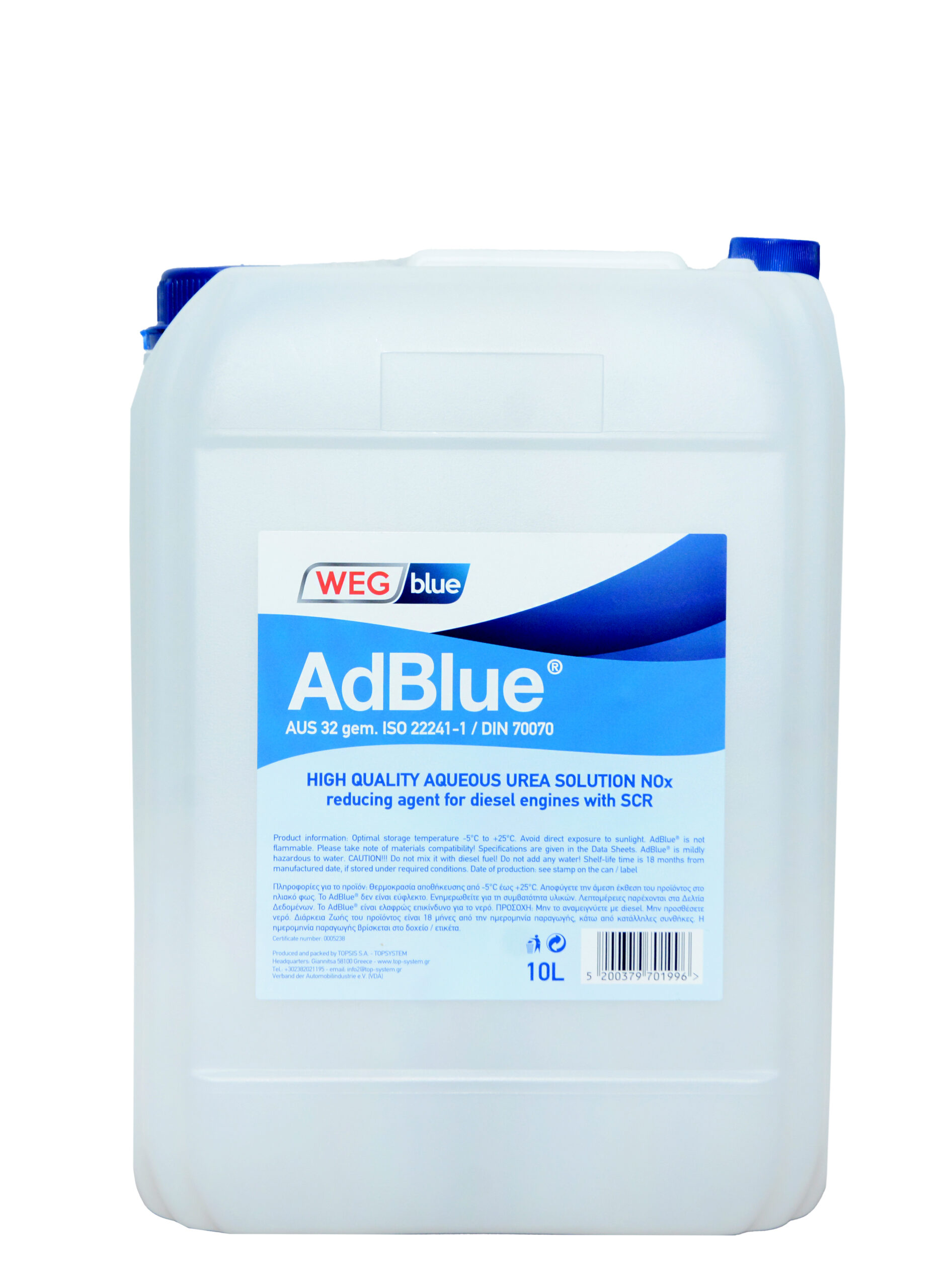
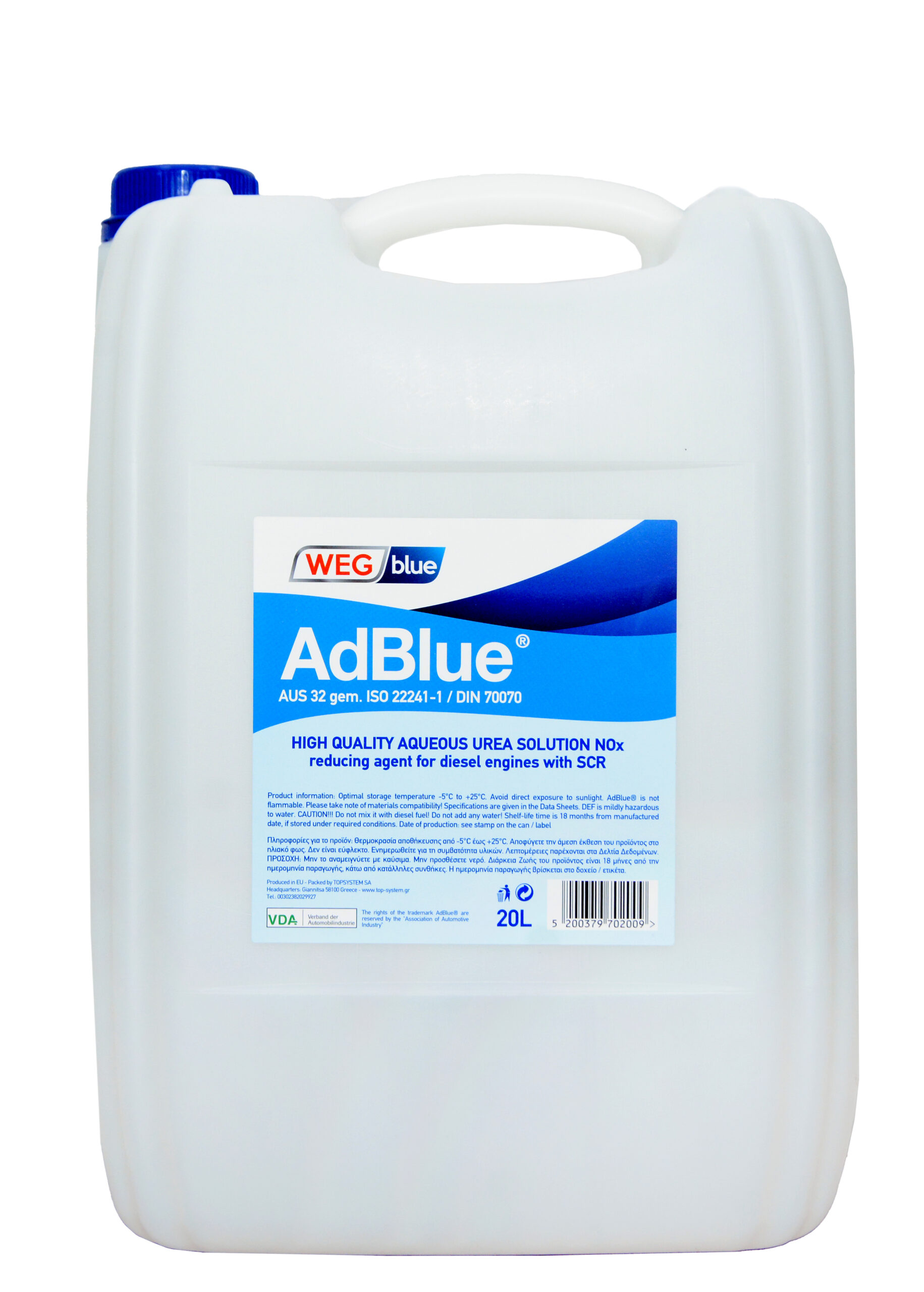
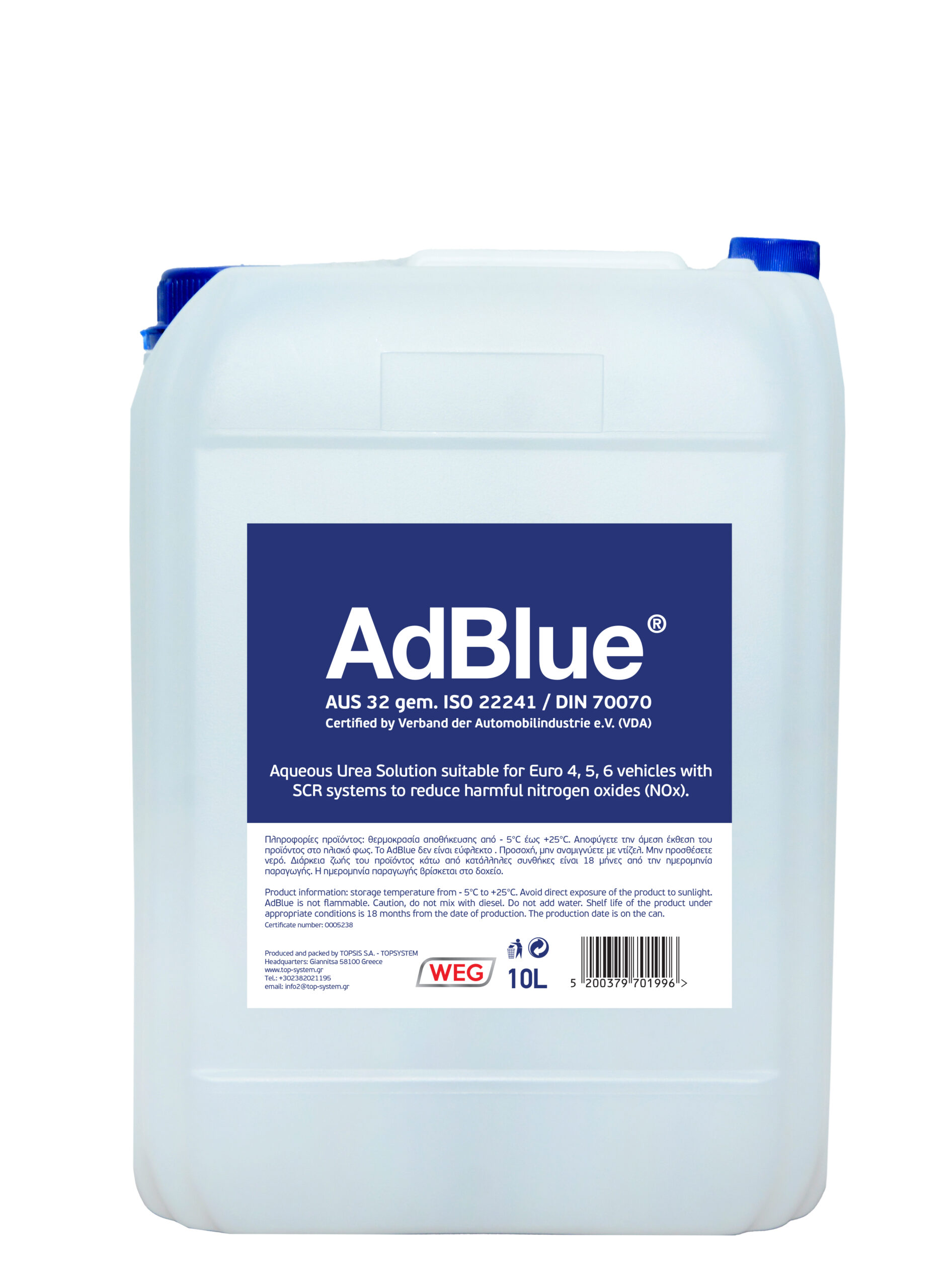
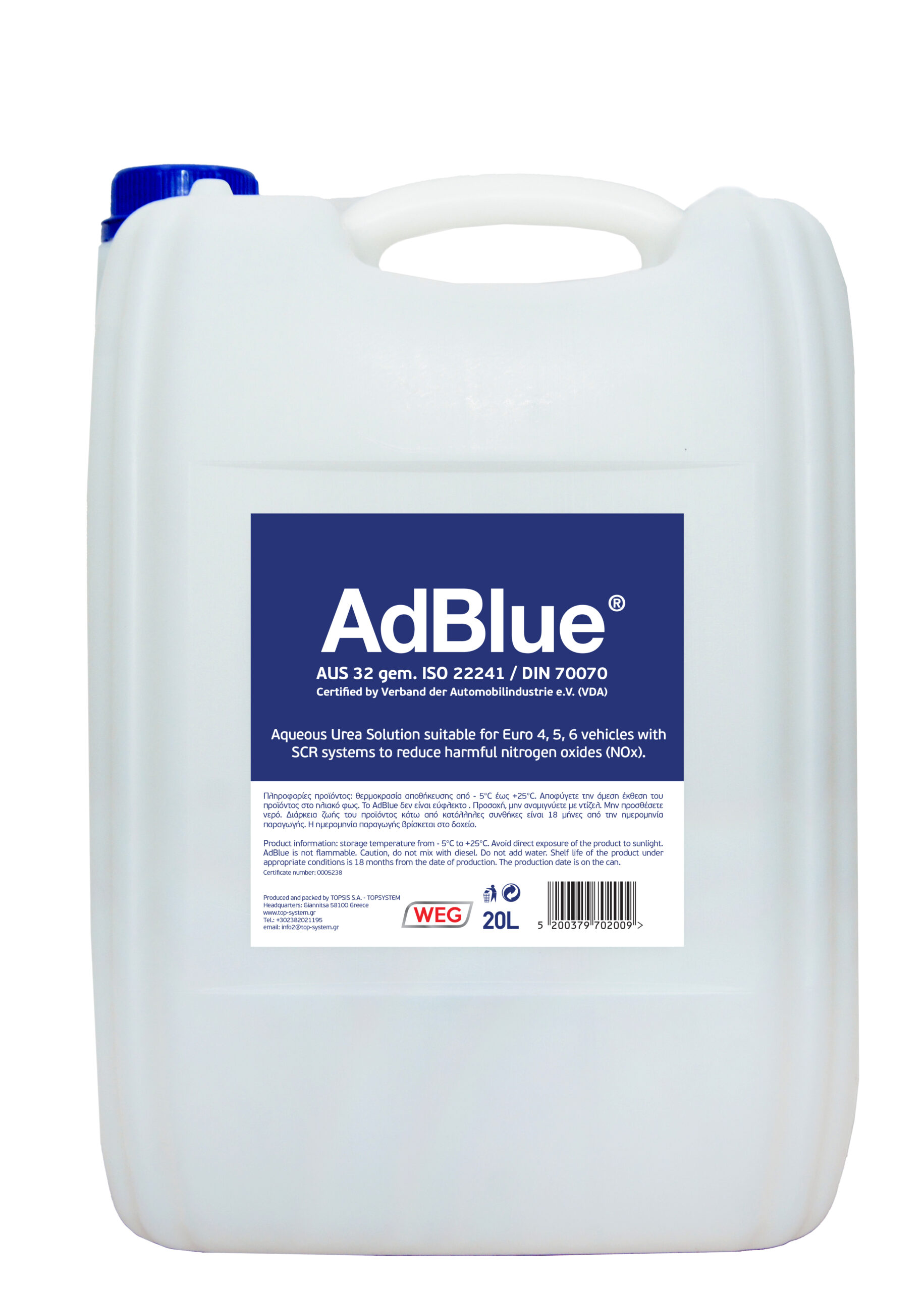
AdBlue® is a colorless liquid used in a car’s exhaust aftertreatment system (SCR) to reduce harmful emissions from diesel engines.
Euro 4 emission standards came into effect in Europe in 2005. This legislation required a reduction in nitrogen oxide emissions from the then-current level of 5.0 to 3.5 g/kWh. The Euro 5 standards enacted in 2008 lowered the permissible level even further to 2.0 g/kWh. In order to meet the new standards, major European vehicle manufacturers agreed on the new SCR (Selective Catalytic Reduction) technology. Thus, AdBlue® was born—a high-purity urea solution used as a reducing agent. SCR technology is already used in the new Euro 6 generation of heavy-duty and passenger vehicles.
How does SCR work?
With the SCR method, high NOx emissions produced by optimal combustion efficiency in the engine are treated by a catalytic converter. This process requires the addition of AdBlue®. A precisely defined volume of AdBlue® is sprayed from the injector nozzle into the exhaust flow, where it is first hydrolyzed and then converts nitrogen oxides (NOx) into nitrogen (N) and water (H₂O) inside the catalytic converter. AdBlue® is the ideal way to utilize the capabilities of SCR technology and ensure compliance with EU emissions legislation.

 Ελληνικά